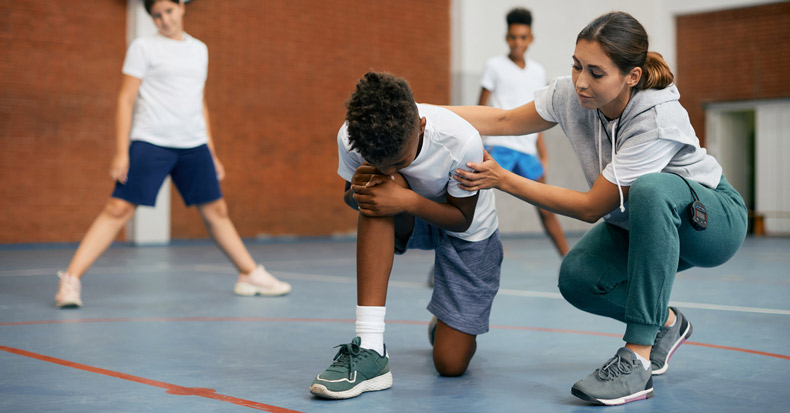
Knee pain accounts for at least one-third of musculoskeletal complaints in the pediatric population seen in healthcare clinics, including chiropractic offices. This is especially common in active children during the growth spurts of early adolescence. Let’s review some of the most common causes of knee pain in kids and teens and how they are typically managed.
Patellofemoral pain syndrome, or kneecap pain, is the most common cause of knee pain in children and adolescents. Pain typically arises from behind the patella and worsens with activities involving knee flexion, such as climbing stairs, squatting, or prolonged sitting. On examination, pain may be reproduced with a single-leg squat, often with inward knee collapse. Treatment includes both weight-bearing and non-weight-bearing exercises targeting the posterior hip and quadriceps. Manual therapy and movement retraining may be used to restore normal joint mechanics. Treatment may include a foot orthotic if excessive ankle pronation is contributing to pain.
Osgood-Schlatter disease (OSD) is inflammation of the growth plate at the tibial tubercle just below the kneecap, often producing a prominent bump that can irritate the patellar tendon during running, jumping, squatting, and kneeling. Treatment typically includes patient education, activity modification, exercise therapy, and use of an infrapatellar strap. Sinding-Larsen-Johansson syndrome is similar to OSD but involves the bottom of the patella rather than the tibial tubercle. Management follows a similar approach.
Patellar tendinopathy, or jumper’s knee, results from cumulative microtears due to repetitive jumping, landing, and sprinting. Management includes reducing high-load activities (while avoiding complete rest), gradually reloading the tendon as symptoms improve, and performing strengthening and flexibility exercises for the quadriceps and hamstrings. Manual therapy and biomechanical corrections may also help improve loading patterns.
In cases such as juvenile idiopathic arthritis, chiropractors may work in coordination with the child’s medical physician or rheumatologist to provide supportive care—such as gentle manual therapy and soft tissue techniques—to improve mobility and reduce muscle tension.
The good news is these conditions generally respond well to conservative management, helping most children return to their normal activities without the need for invasive treatment.