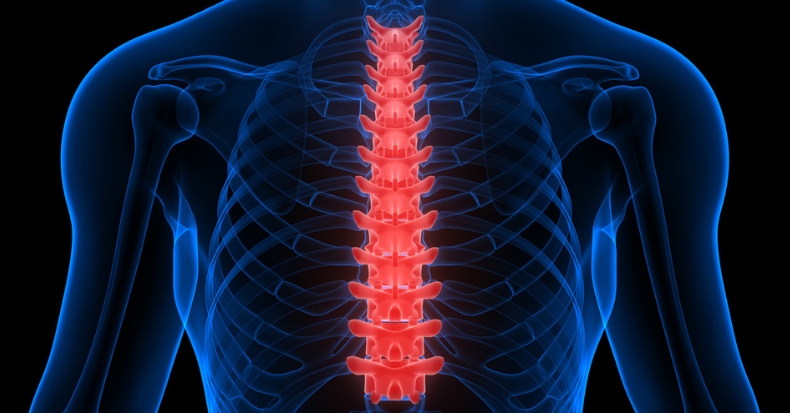
Neck pain is a common condition that can make everyday activities more difficult. While discomfort is felt in the neck, its cause may not always be limited to the cervical spine and associated tissues because the neck does not exist in isolation. It has been theorized that because the neck and mid-back (thoracic spine) work together during nearly every upper-body movement, restricted motion in the thoracic spine may increase mechanical stress on the tissues of the neck, elevating the risk of pain or injury.
Common conditions that affect the mid-back include restricted or dysfunctional thoracic facet joints, loss of normal thoracic mobility, excessive rounding of the upper back (thoracic kyphosis), rib joint dysfunction, muscle tightness and trigger points in the upper back and shoulder girdle, and weakness of the muscles that stabilize the shoulder blades. Because these problems can alter posture and reduce normal thoracic motion, they may also alter biomechanics and place added strain on the muscles and joints of the neck. Over time, these mechanical changes may contribute to neck pain, stiffness, and reduced range of motion.
Based on this proposed mechanical relationship, researchers have investigated whether improving thoracic mobility can also improve neck pain and function. In one study, the authors reviewed 17 randomized clinical trials and found that spinal manipulative therapy applied to the thoracic spine showed evidence of reducing pain, improving function, and decreasing disability in individuals with neck pain.
A second study reached a similar conclusion using a different therapeutic approach. The research team found that combining manual therapy to improve thoracic mobility with exercises to improve posture reduced neck pain and disability while increasing neck range of motion in patients with mechanical neck pain. Together, the available evidence suggests that improving thoracic mobility and posture may help reduce mechanical stress on the neck, decrease pain and disability, and improve function during everyday activities.
This body of research highlights the importance of evaluating the whole person rather than focusing only on where pain is felt. Neck pain often has multiple contributing factors, and restrictions in nearby joints or muscles may represent one piece of the puzzle. A thorough evaluation can help identify the factors most likely responsible for an individual’s symptoms. Based on these findings, the chiropractor can develop a treatment plan that addresses the potential underlying causes with the goal of reducing pain and disability, restoring function, and potentially lowering the risk of future episodes.