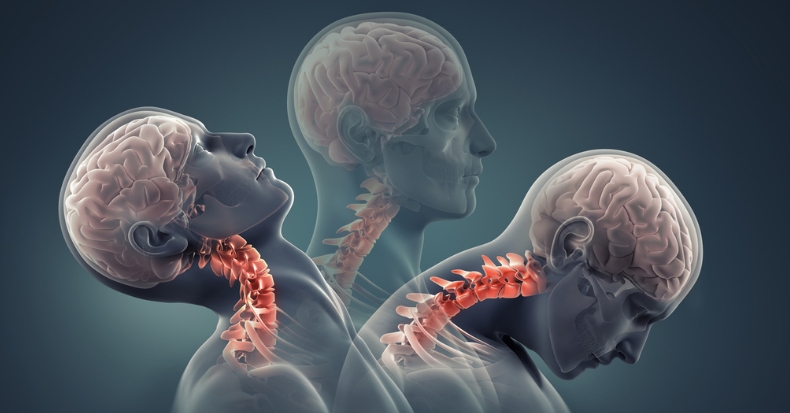
The neck contains many structures that work together to support the head and allow smooth movement, including muscles, ligaments, disks, nerves, and facet joints. During a whiplash injury, the neck can experience rapid forces that stretch these tissues, contributing to the myriad symptoms collectively known as whiplash-associated disorders (WAD). According to a recent systematic review, injuries to the cervical facet joints—small joints located at the back of the spine that guide movement between the vertebrae—are a common source of pain following whiplash, even if routine imaging tests do not reveal obvious structural damage.
The review, which examined 49 studies, found that the joint capsule surrounding the cervical facet joints can sustain what researchers call a subfailure injury. In simple terms, this means the tissue is stretched enough to develop microscopic strains without tearing or causing obvious structural damage. Even though these tiny injuries may not appear on imaging tests, they can still stimulate pain-sensitive tissues, causing pain that is often aggravated by certain neck movements or positions.
Of note, the authors also found that these small injuries may increase the sensitivity of the nervous system, allowing pain signals to continue long after the initial injury. This could help explain why nearly half of patients with WAD continue to experience symptoms a year after their injury, even though the injured tissues would generally be expected to have undergone substantial healing.
These findings highlight the importance of the physical examination when assessing a patient after a motor vehicle collision, sports injury, head trauma, or slip-and-fall accident. By evaluating how the neck responds to palpation, assessing range of motion, and observing which movements reproduce the patient’s symptoms, a doctor of chiropractic can identify patterns that may suggest involvement of one or more cervical facet joints. While no single examination finding can definitively diagnose a facet joint injury, the physical examination helps determine the most likely source of pain and guides appropriate treatment.
If one or more facet joints are suspected to have been injured, chiropractic care often includes a combination of gentle spinal manipulation or mobilization, soft tissue therapy, therapeutic exercises, and postural recommendations designed to reduce pain, restore normal joint motion, and improve the strength and coordination of the muscles that support the neck. Patients are generally encouraged to remain as active as their symptoms allow rather than immobilizing the neck with a cervical collar, as prolonged use can lead to muscle deconditioning, joint stiffness, and an increased risk of persistent symptoms.