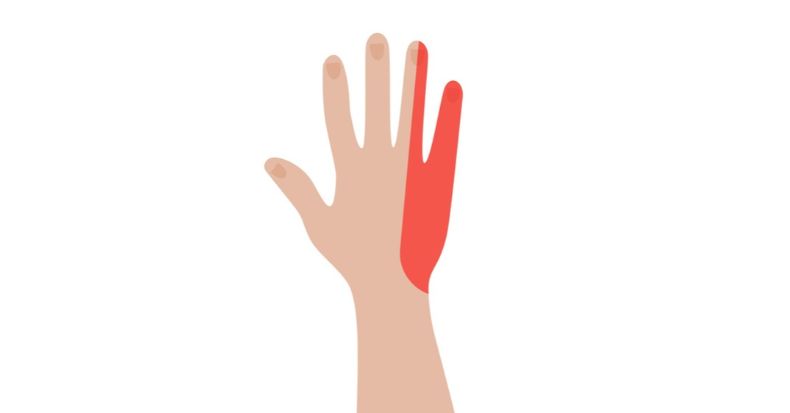
Ulnar tunnel syndrome, also known as Guyon’s canal syndrome, is a condition that occurs when the ulnar nerve becomes compressed or irritated as it passes through a narrow passageway in the wrist called Guyon’s canal. This tunnel is located on the palm side of the wrist, bordered by small wrist bones and enclosed by ligaments and connective tissue. Although less common than carpal tunnel syndrome, Guyon’s canal syndrome can interfere with everyday activities such as typing, gripping objects, and using tools.
Much like the carpal tunnel, space in Guyon’s canal is limited, so swelling or pressure from surrounding structures can interfere with normal nerve function. Repeated pressure against the palm, particularly during activities such as cycling or using hand tools, may irritate the ulnar nerve. Wrist injuries, arthritis, and space-occupying structures such as fluid-filled ganglion cysts can also affect ulnar nerve function. Symptoms may include numbness, tingling, burning, or pain affecting the little finger and the adjacent half of the ring finger. Some individuals also experience hand weakness, reduced grip strength, or difficulty performing precise finger movements.
Because several nerve conditions produce similar symptoms, an accurate diagnosis is important. A healthcare provider typically begins by reviewing symptoms, work activities, and medical history before examining sensation, muscle strength, and hand movement. The examination may also include tests that assess whether pressure over the ulnar nerve reproduces symptoms. Guyon’s canal syndrome must be distinguished from cubital tunnel syndrome, which involves compression of the same nerve at the elbow, and from nerve problems originating in the neck. Nerve conduction studies, electromyography, or imaging may be recommended when the diagnosis is uncertain or a structural cause is suspected.
For mild cases without progressive weakness, conservative management may help reduce nerve irritation and improve hand function. Treatment may include limiting activities that place pressure on the palm, adjusting workstation ergonomics, and using a wrist splint when appropriate. Depending on the findings, gentle nerve-gliding exercises, soft-tissue therapy, joint mobilization, or rehabilitative exercises may also be considered, although research supporting specific conservative treatments for this condition remains limited. Persistent numbness, increasing weakness, or muscle wasting warrants prompt medical assessment, as some causes of compression require specialized treatment.
Chiropractors are trained to evaluate musculoskeletal conditions, assess possible nerve involvement, and recognize findings that warrant referral to another healthcare professional. When appropriate, chiropractic care may help patients manage symptoms through activity modifications, manual therapies, and targeted exercises. Because treatment depends on the source and severity of nerve compression, identifying the underlying cause early is important for protecting hand function and supporting recovery.