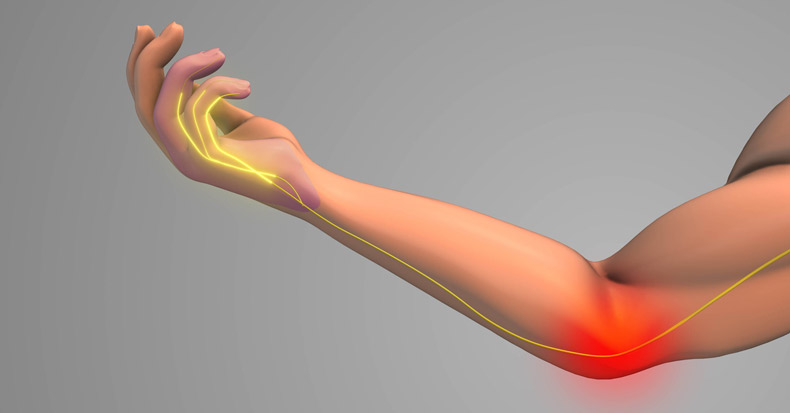
Cubital tunnel syndrome occurs when the ulnar nerve becomes compressed or irritated as it passes through a narrow space on the inside of the elbow called the cubital tunnel. This can result in numbness or tingling in the ring and little fingers, hand weakness, reduced grip strength, and aching pain along the inside of the elbow. Symptoms are often more noticeable when the elbow remains bent for prolonged periods, such as while sleeping or talking on the phone. While repetitive elbow bending and prolonged pressure on the elbow are well-known contributors, several health conditions may also increase one’s risk:
- Smoking – Smoking can reduce blood flow to nerves, increase inflammation, and impair healing, making nerves more vulnerable to compression.
- Diabetes – High blood sugar may damage nerves and the small blood vessels that supply them. Nerves of diabetic patients may become symptomatic under lower levels of compression and often recover more slowly.
- Hypertension – High blood pressure may affect the small blood vessels that nourish nerves and is frequently associated with other metabolic conditions that influence nerve health.
- Excess Body Weight – Obesity may increase pressure around the elbow, contribute to inflammation, and is strongly associated with diabetes and metabolic syndrome.
- Carpal Tunnel Syndrome – Carpal tunnel syndrome and cubital tunnel syndrome share many of the same risk factors, including diabetes, obesity, smoking, and inflammatory conditions. In some cases, irritation of nerve roots in the neck or the brachial plexus from which these nerves arise may reduce the nervous system’s tolerance to compression, making symptoms more likely to develop at multiple locations in the arm.
- Osteoarthritis – Bone spurs, joint enlargement, and changes in elbow structure may reduce the space available for the ulnar nerve.
- Rheumatoid Arthritis – Chronic inflammation, tissue swelling, and joint deformity may increase pressure on nerves and raise the likelihood of nerve entrapment.
As with other nerve entrapment disorders, seeking care early when symptoms are mild and less frequent is often associated with better outcomes. If these factors are suspected to contribute to a patient’s symptoms, a chiropractor may coordinate care with other healthcare providers while providing conservative treatment aimed at improving the mobility of the ulnar nerve along its course, including through the cubital tunnel.