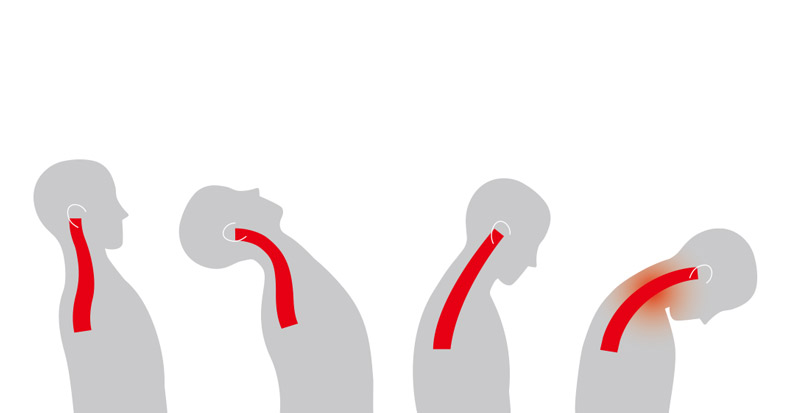
Because rear-end motor vehicle collisions are the most common cause of whiplash injury, researchers have continuously sought to better understand this unique injury process, not only to derive more effective treatment strategies, but also to implement safety mechanisms in automobiles to reduce the risk of injury in the event of a car accident. As such, […]
Search Results for: how to prevent whiplash
Fatty Infiltration and Chronic Whiplash Associated Disorders

Whiplash-associated disorders (WAD) refer to a range of symptoms—including neck pain, stiffness, headaches, dizziness, and reduced mobility—that arise from a hyperextension-flexion injury of the cervical spine. This commonly occurs due to sudden acceleration and deceleration forces, most often seen in motor vehicle collisions. Research suggests that up to 50% of the 3 million Americans who […]
Chronic Whiplash Predictors: Psychosocial vs. Anatomical

Whiplash associated disorders (WAD) is a term used to describe the constellation of signs and symptoms that can arise following the sudden acceleration-deceleration of the head and neck that can occur in automobile collisions, physical trauma (such as sports or assault), or a serious fall. It’s estimated that half of WAD patients will continue to […]
Whiplash and the Thoracic Spine

Though whiplash associated disorders (WAD) is a term used to encompass the myriad of symptoms associated with whiplash injury, research has largely focused on the neck, and more recently, brain. However, there is another area of the body that often experiences injury during trauma involving the sudden back and forth movement of the head and […]
Warning Signs for Chronic Whiplash

Whiplash injury can occur from any rapid acceleration/deceleration of the head and neck, and it can lead to a cluster of symptoms including neck pain, headache, dizziness/balance loss, fatigue, depression, irritability, mental fog, tinnitus, and more that is collected under the umbrella term whiplash associated disorders (WAD). The current data suggest that roughly half of […]
Cervical Spinal Stenosis and Whiplash Injury

Cervical spinal stenosis (CSS) is a condition characterized by the narrowing of the spaces within the spine through which the spinal cord and the nerves pass. The condition becomes more common with age, affecting 6.8% of adults over age 50 and 9% of those over age 70. While it’s not unusual for a CSS patient […]
Eye Exercises for the Whiplash Patient

Whiplash associated disorder (WAD) has been known to affect nerve function, which can manifest as several symptoms, including visual problems. If the initial chiropractic examination reveals altered ocular function, the patient’s chiropractor may recommend a variety of eye-specific exercises to aid in the healing process. Blinking: When using a screened device, blinking essentially rests the […]
Whiplash Injury and Stress Induced Analgesia and the Connection with Chiropractic Spinal Adjusting

“Nothing in Biology Makes Sense Except in the Light of Evolution” – Theodosius Dobzhansky (1900-1975) Ukrainian-American Geneticist and Evolutionary Biologist Historical Background Most humans older than 60 years of age have a detailed memory of the Vietnam War. The Vietnam War extended 20 years, from 1955 to 1975. United States soldier-on-the-ground involvement in the war […]
The Spinal Cord and Whiplash Injuries

When a whiplash event occurs—such as a motor vehicle collision—the rapid back and forth motion of the head can injure the bones, muscles, ligaments, joints, and nerves (including the spinal cord) in the neck leading to the collection of symptoms known as whiplash associated disorders (WAD). While about 50% of those injured can expect a […]
Whiplash and Women

Whip Cracking Mystery Explained The snapping of a whip occurs in part because the tip of the whip reaches the speed of sound and creates a sonic boom. “Although the loop travels at one speed, some parts of the whip, including the tip in the final stages of motion, travel twice as fast.” Professor Alain […]
- « Previous Page
- 1
- 2
- 3
- 4
- …
- 11
- Next Page »